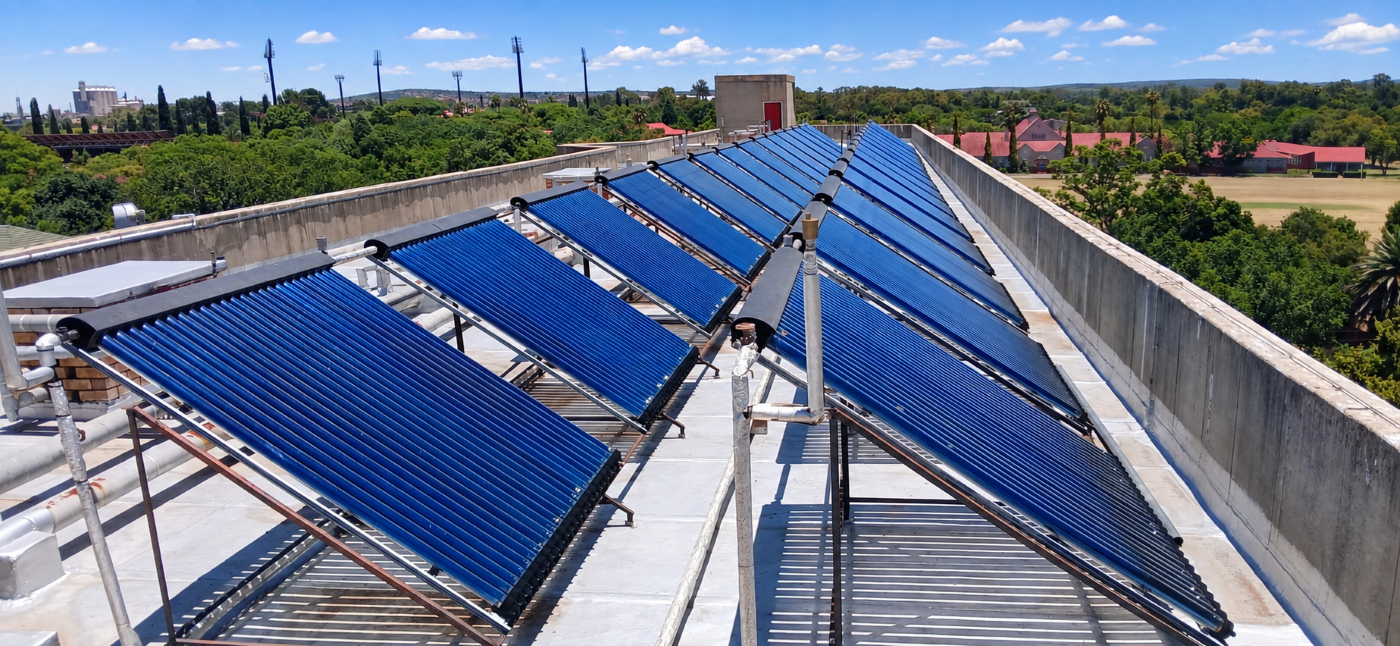
Sellers in
the Real Estate market rarely receive direct corolated compensation for money spent
on improvements and increase in their actual selling price - solar
installations seems to be the one propbable exeption.
Sellers in the property market
have a long-standing difficulty with market price, as they often feel that they
don’t receive fair compensation for improvements made to their property.
Improvements such as a renovated kitchen or bathroom seldom show a direct
correlation between money spent and the eventual increase in selling price.
A
renovated kitchen, new bathroom or attractive finishes may improve a property's
appeal, but their contribution to value remains strongly influenced by personal
preference. What one purchaser considers essential, another may regard as
unnecessary.
With solar installations, the
market reaction appears to be some what different. Although there is still no
direct correlation between the cost of the installation and the increase in
selling price, solar provides something that many other improvements do not:
A
measurable future economic benefit.
Apart
from convenience and energy reliability, reduced electricity costs give the
prospective purchaser something more tangible to consider than aesthetics and
convenience alone.
In
the South African residential market, energy reliability has become an
increasingly important consideration for purchasers, with solar, inverter and
battery systems influencing buying decisions. This does not mean that the
market simply adds the cost of the installation to the price of the property.
The age, capacity, condition and remaining useful life of the system, as well
as the actual benefit it provides, remain relevant.
The
commercial property market presents an even stronger economic argument.
For
an income-producing property, reduced electricity costs can affect the total
cost of occupation, operating expenses and ultimately net operating income.
These benefits are more readily measurable and may therefore be more directly
reflected in investment decisions and property values.
There
are also indications that the positive price effect becomes stronger where
energy efficiency forms part of the overall performance of the building, rather
than being limited to an isolated solar installation.
The
2025 MSCI South Africa Green Annual Property Index found that green-certified
Prime and A-grade offices continued to achieve higher income, lower vacancies
and higher capital values than comparable non-certified offices. It is
important, however, to recognise the distinction:
These results relate to
green-certified buildings as a whole and not to solar installations in
isolation.
The important valuation principle
remains:
The cost of an improvement does not
determine its contribution to Market Value. The market does.
With solar, however, the market has something
particularly useful to measure:
 The future economic benefit that accompanies the
improvement.
This
may explain why solar is perceived differently from improvements whose
benefits
are predominantly aesthetic.
References:
MSCI South Africa Green Annual Property Index 2025.
FNB Property Barometer – Special Report: Alternative Energy Solutions.